Immune Boosting Detox – How It Works, Benefits, and What to Watch Out For

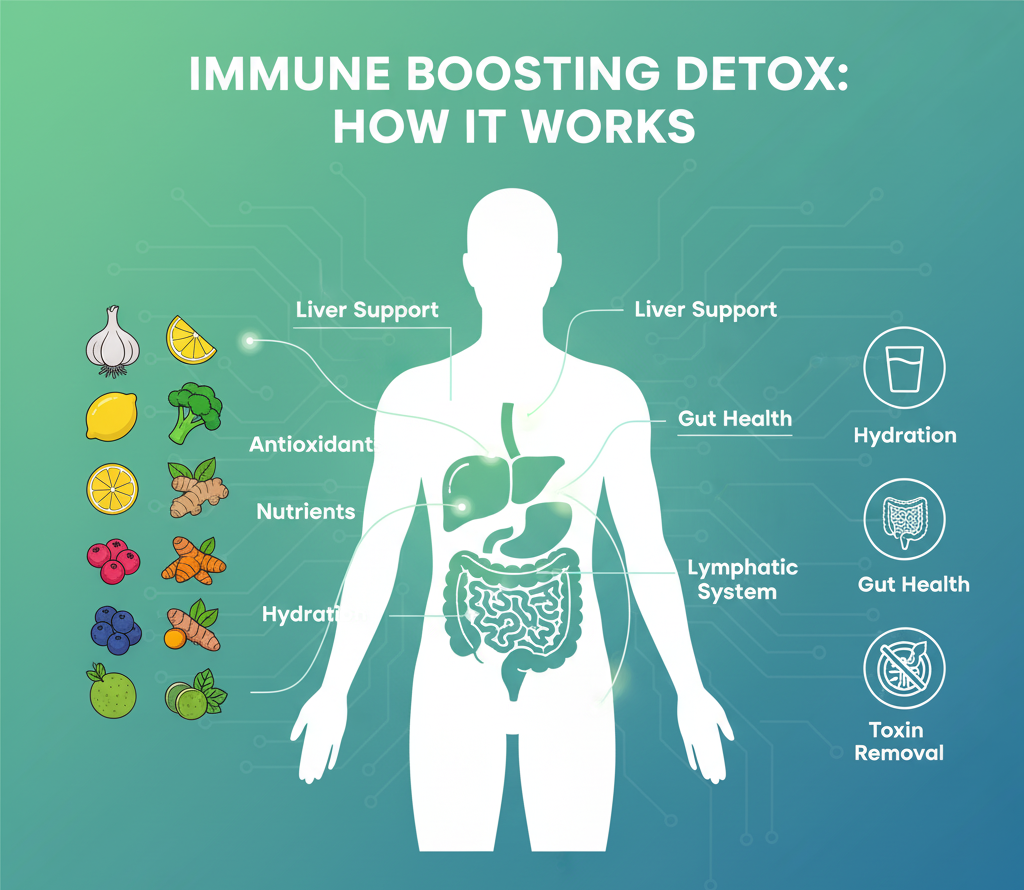
Unlike trendy “quick fixes,” a true immune-supporting detox works by reducing toxic load and nourishing the body’s built-in defense systems — especially the liver, gut, and lymphatic system. The goal is to help your immune cells function more efficiently by improving digestion, lowering inflammation, and supplying key nutrients like vitamin C, zinc, and glutathione precursors.
How Does It Work?
This detox approach avoids processed foods, sugar, alcohol, and additives that can burden the immune system. Instead, it emphasizes:
- Whole plant foods rich in antioxidants and fiber
- Hydration to support lymphatic flow and toxin elimination
- Gut-friendly ingredients to strengthen the microbiome
- Liver-supporting herbs and spices like turmeric and ginger
The result is a gentle reset that helps your body defend against infections, recover from stress, and maintain energy.
Key Benefits
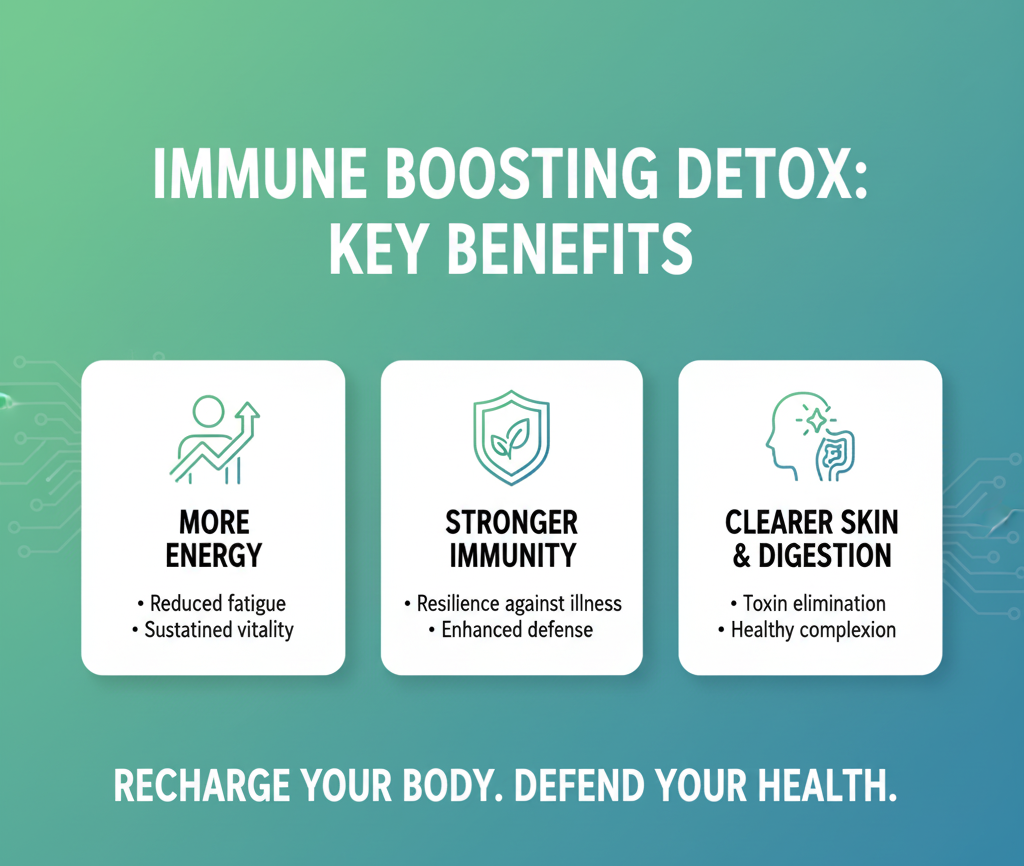
- May reduce inflammation, which supports immune cell function
- Improves digestion and gut health, where much of immunity begins
- Supports liver and lymphatic detox pathways, aiding waste removal
- Boosts energy and mental clarity, especially after illness or fatigue
- Encourages healthy habits, like hydration and mindful eating
Potential Risks
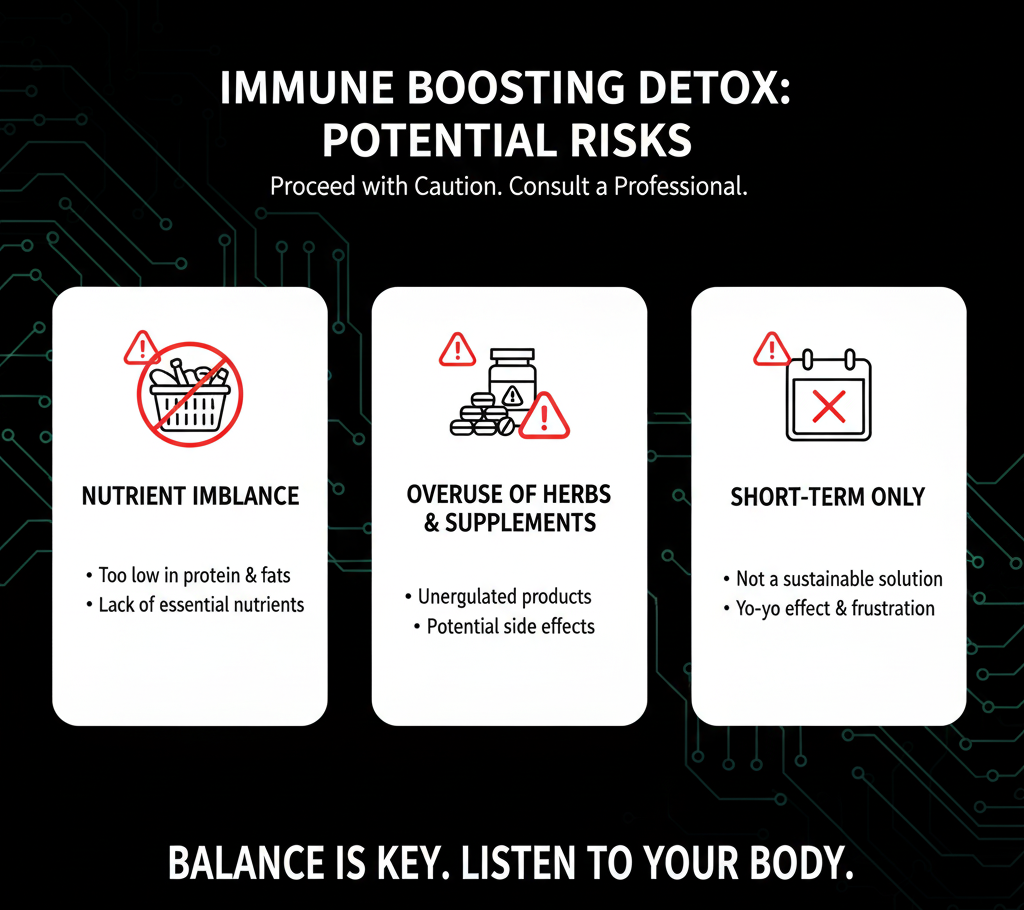
- Overuse of detox supplements or teas may strain the liver or kidneys
- Too little protein or calories can weaken immune response
- Not suitable for people with chronic illness or nutrient deficiencies without guidance
- Short-term only — long-term immunity depends on daily nutrition and lifestyle
What to Eat During an Immune Boosting Detox
Recommended foods:
- Vegetables: spinach, kale, broccoli, sweet potato, beetroot
- Fruits: citrus, berries, kiwi, pomegranate
- Whole grains: oats, quinoa, brown rice
- Healthy fats: avocado, olive oil, flaxseed
- Herbs and spices: garlic, ginger, turmeric, parsley
- Fluids: water, lemon water, herbal teas (echinacea, elderberry, peppermint)
- Fermented foods: sauerkraut, kefir, sugar-free yogurt
Avoid:
- Alcohol and caffeine
- Refined sugar and processed snacks
- Fried foods and additives
- Dairy (if sensitive) and red meat (during detox phase)
Tips for Getting Started
- Start with a 3–5 day plan, focusing on hydration and whole foods
- Include protein sources, like legumes or plant-based powders
- Avoid harsh cleanses, and prioritize gentle, nourishing meals
- Track your energy, digestion, and mood, not just weight
- Ask the Smart Assistant for a personalized immune detox based on your sensitivities and goals