Colon Cleanse – How It Works, Benefits, and What to Watch Out For
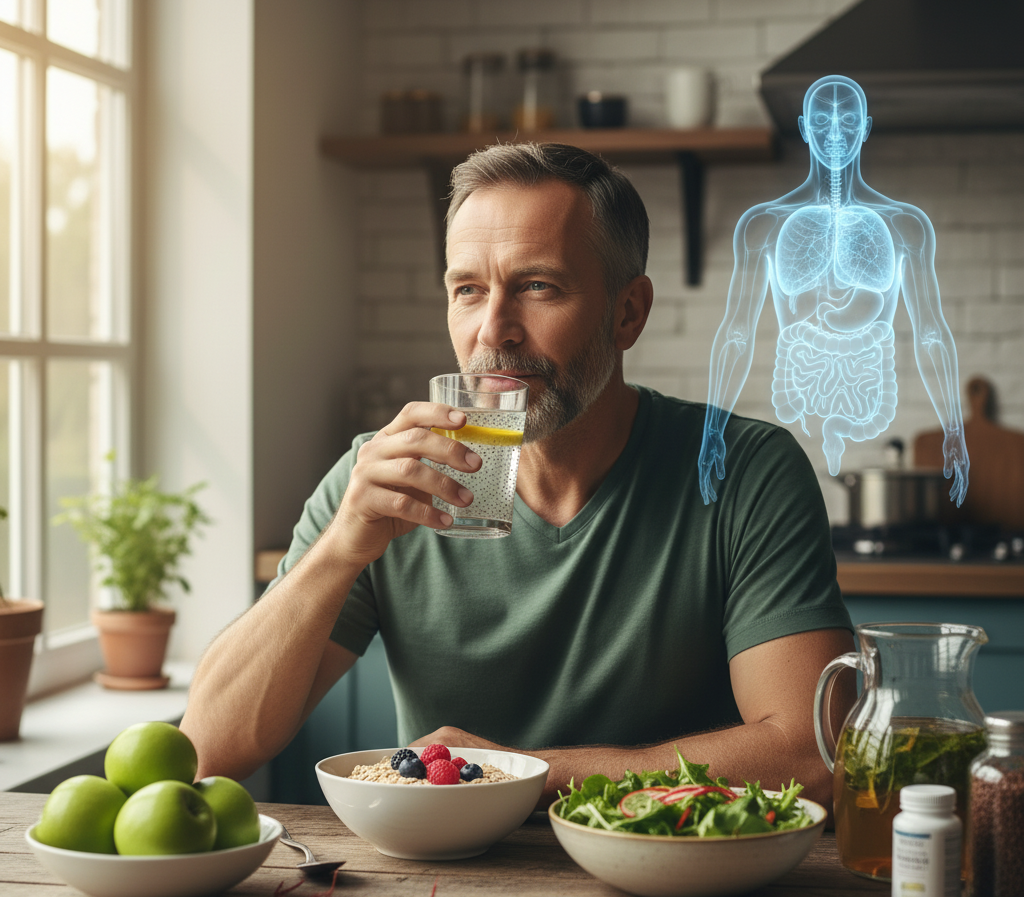
Colon cleansing — also called colonic irrigation or bowel detox — involves removing waste from the large intestine using hydration, fiber, and gentle stimulation. It’s often done over 1 to 3 days using food-based protocols, herbal teas, or in some cases, medical procedures. While not medically necessary for most people, a well-designed cleanse may help reset digestion and reduce discomfort.
How Does It Work?
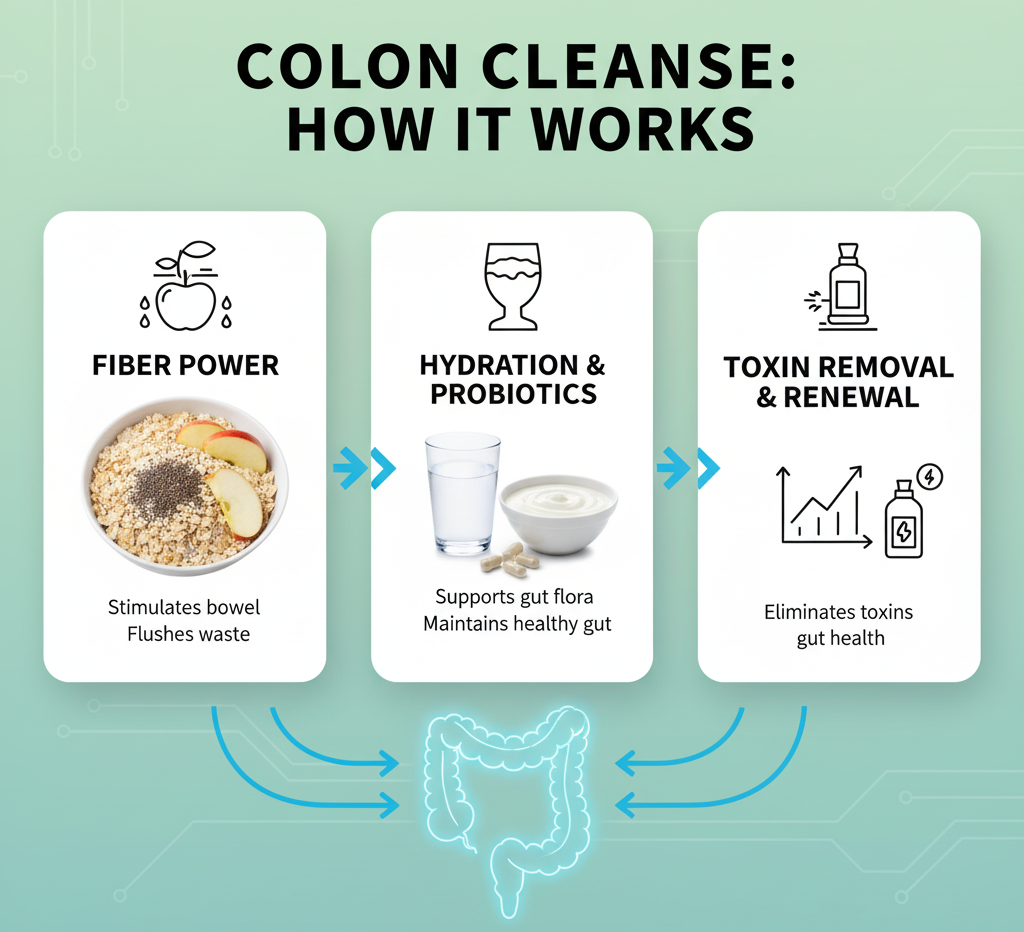
The colon (large intestine) absorbs water and electrolytes from digested food and eliminates waste. A colon cleanse aims to support this process by:
- Increasing fiber intake to stimulate bowel movements
- Enhancing hydration to soften stool
- Using natural ingredients (e.g. aloe, psyllium, magnesium) to promote regularity
Some cleanses also include probiotics to restore gut flora after detox.
Key Benefits
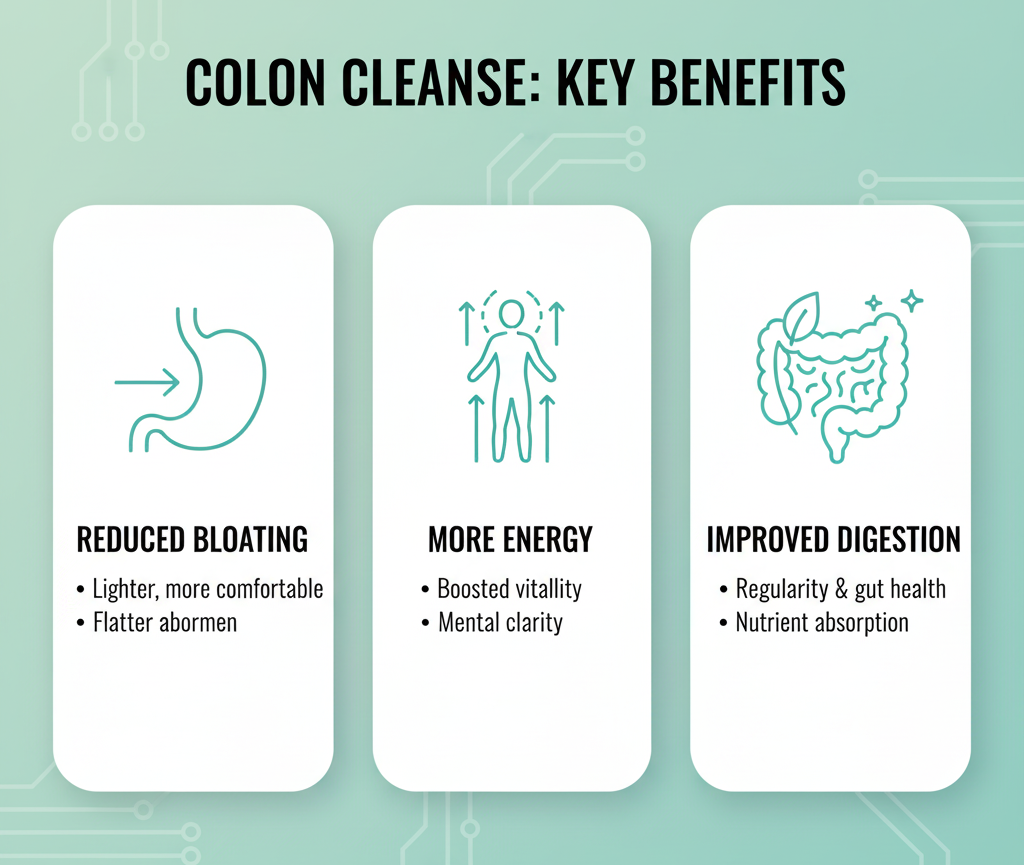
- May relieve constipation and bloating, especially after heavy meals or travel
- Can improve digestion and regularity, by clearing backed-up waste
- May enhance nutrient absorption, once the colon is cleared
- Encourages mindful eating and hydration habits
- Can reset cravings, especially for sugar and processed foods
Sources:
Potential Risks
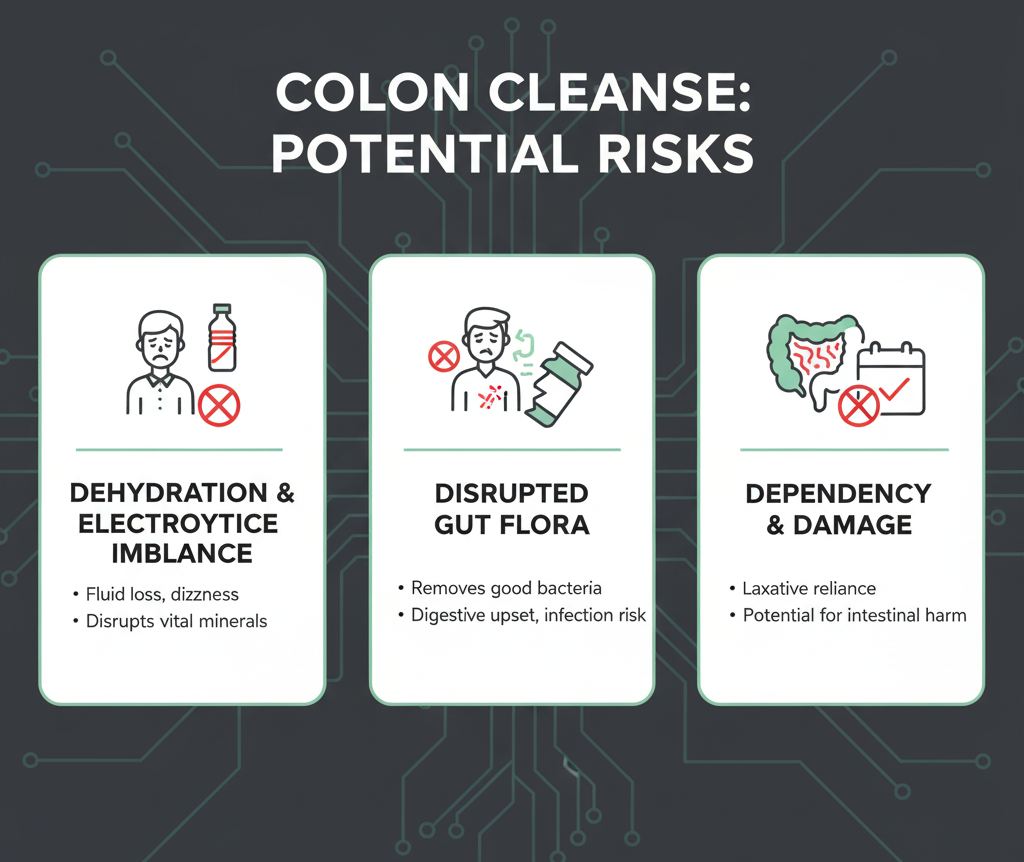
- Overuse of laxatives or enemas may cause dehydration or electrolyte imbalance
- Disruption of gut flora, especially with aggressive cleanses
- Not recommended for people with IBS, Crohn’s, or other digestive conditions without medical advice
- Short-term effects only — long-term gut health depends on daily fiber and hydration
Sources:
What to Eat During a Colon Cleanse
Recommended foods:
- Vegetables: leafy greens, celery, cucumber, carrots
- Fruits: apples, pears, kiwi, berries (high in fiber)
- Whole grains: oats, brown rice, quinoa
- Fluids: water, herbal teas (peppermint, ginger), diluted fruit juices
- Natural fiber sources: flaxseed, chia seeds, psyllium husk
- Probiotics: sugar-free yogurt, kefir, sauerkraut
Avoid:
- Red meat and processed foods
- Dairy (if sensitive)
- Fried foods and refined sugars
- Alcohol and caffeine
Tips for Getting Started
- Start with a 1–3 day plan, focusing on hydration and fiber
- Avoid harsh laxatives or extreme fasting
- Add gentle movement, like walking or yoga
- Track your digestion and energy, not just weight
- Ask the Smart Assistant for a personalized colon cleanse based on your sensitivities and goals