Mediterranean Diet – How It Works, Benefits, and What to Watch Out For
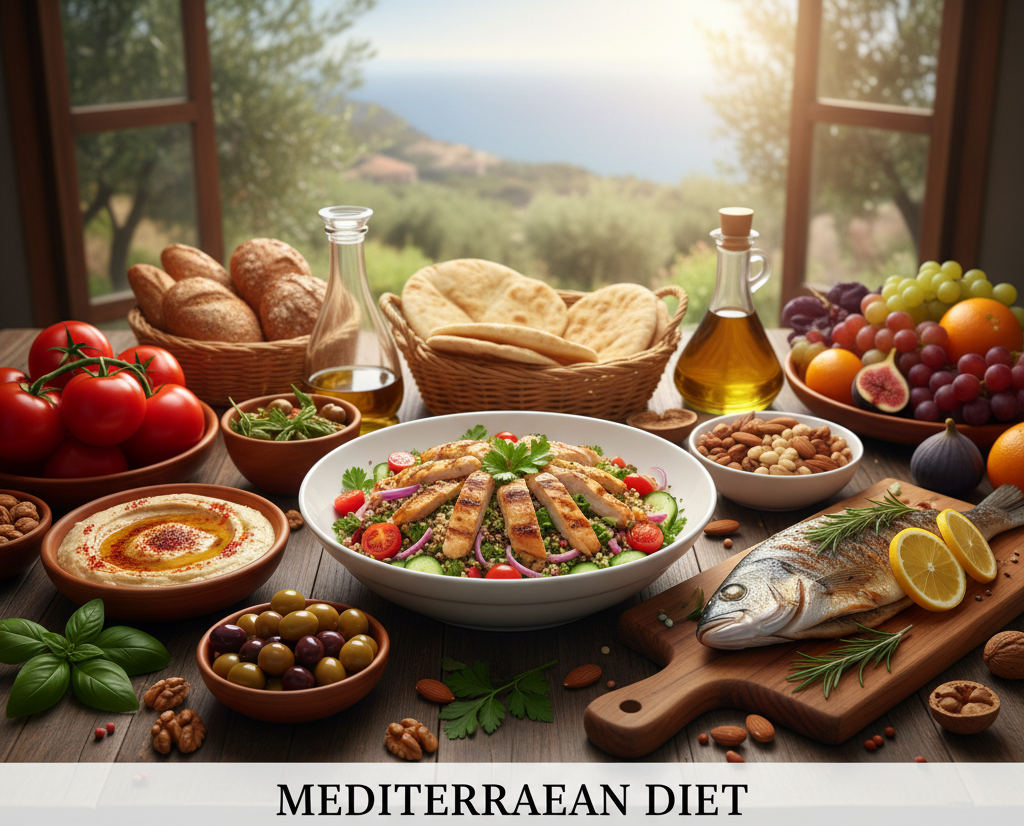
The Mediterranean Diet is inspired by the traditional eating patterns of countries bordering the Mediterranean Sea — such as Greece, Italy, and Spain. It emphasizes whole, minimally processed foods, healthy fats, and a balanced lifestyle. Recognized as one of the healthiest diets globally, it supports heart health, weight management, and long-term wellness.
How Does It Work?
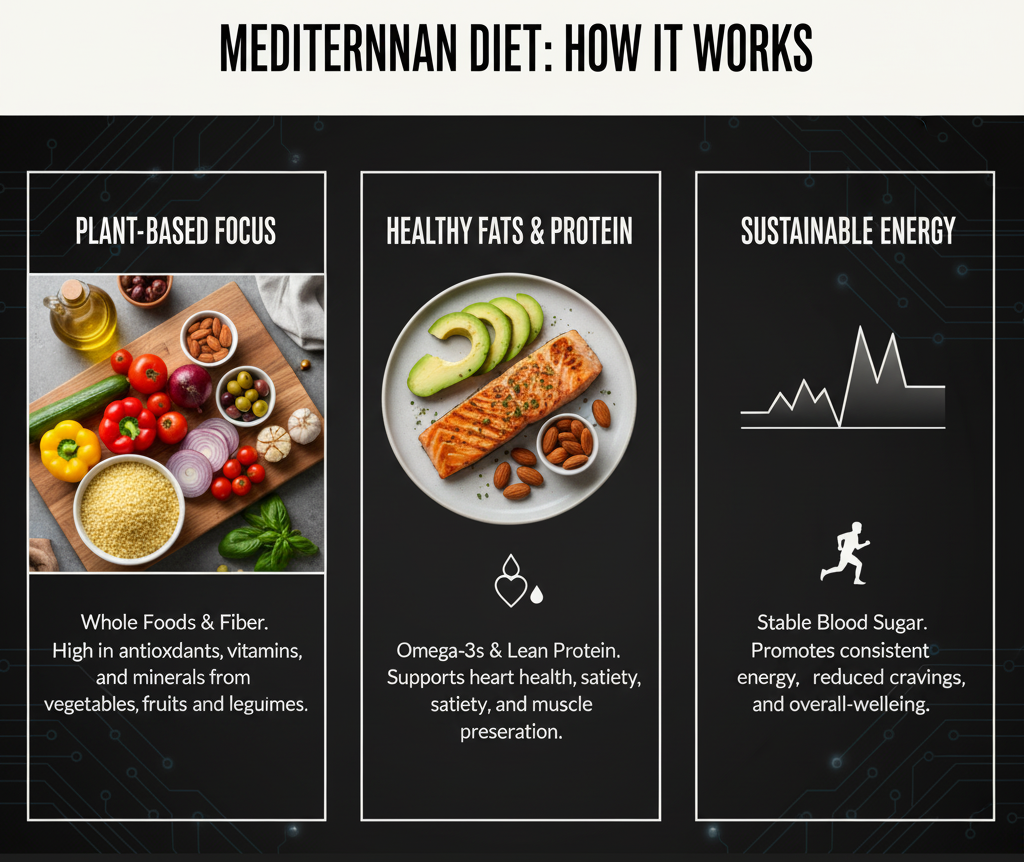
Unlike restrictive diets, the Mediterranean Diet focuses on nutrient-rich foods and moderation. It includes plenty of vegetables, fruits, whole grains, legumes, nuts, seeds, and olive oil — with moderate amounts of fish, poultry, and dairy. Red meat and sweets are limited. Combined with regular physical activity and mindful eating, this diet promotes sustainable health improvements.
Key Benefits
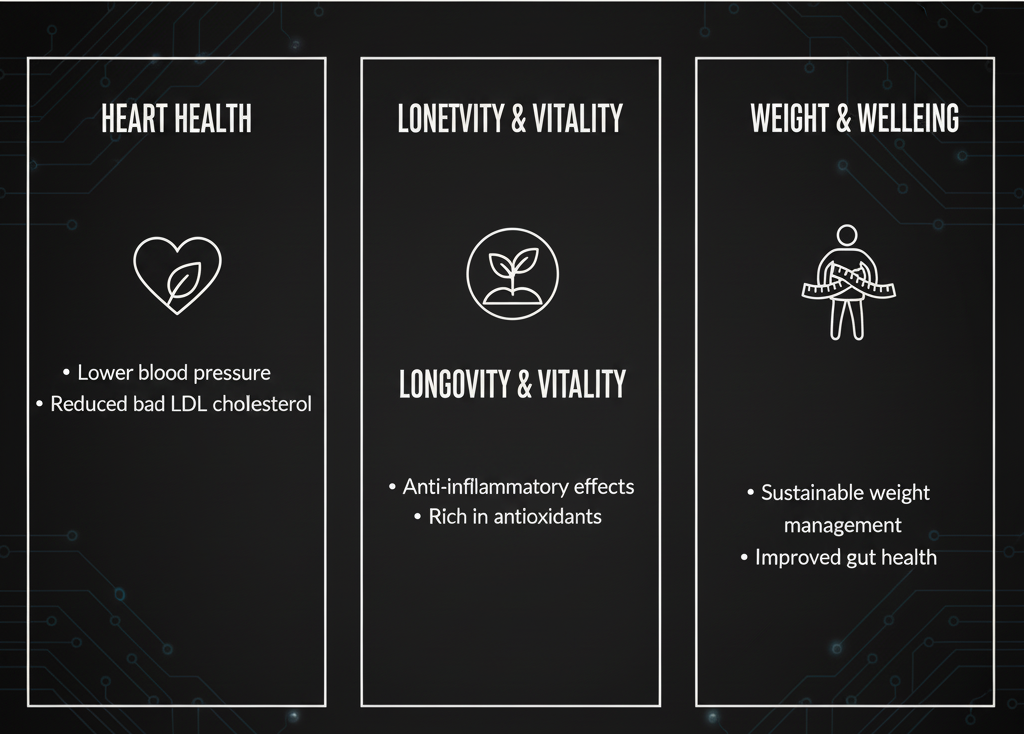
- Supports heart health, by reducing LDL cholesterol and blood pressure
- Promotes weight management, without extreme restrictions
- Improves digestion, thanks to fiber-rich foods and healthy fats
- May reduce risk of chronic diseases, including diabetes, stroke, and certain cancers
- Encourages a balanced lifestyle, including social meals and physical activity
Potential Risks
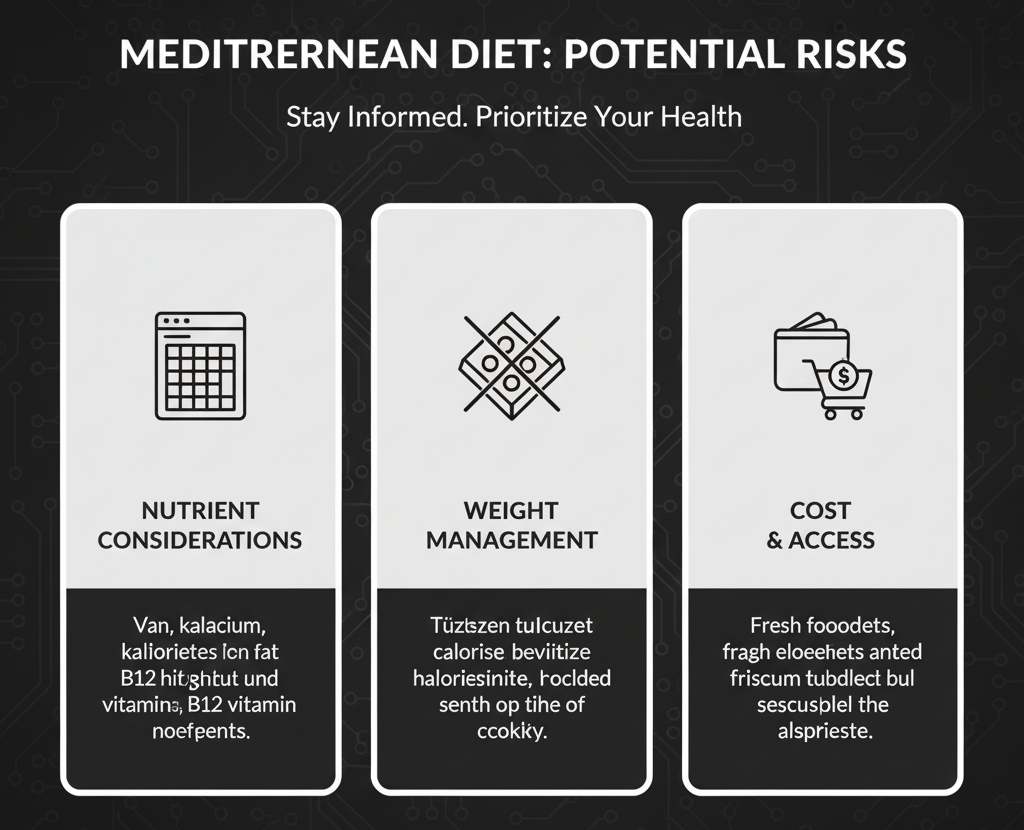
- Overconsumption of fats, even healthy ones, may hinder weight loss
- Alcohol intake, especially wine, should be moderate and optional
- Not ideal for strict low-carb or keto followers, due to grain and legume content
- Requires access to fresh produce and quality ingredients, which may be costly or seasonal
What to Eat on a Mediterranean Diet
Recommended foods:
- Vegetables: tomatoes, spinach, eggplant, peppers, leafy greens
- Fruits: oranges, grapes, berries, apples
- Whole grains: oats, brown rice, whole wheat bread, bulgur
- Legumes: lentils, chickpeas, beans
- Healthy fats: olive oil, nuts, seeds, avocado
- Proteins: fish (especially oily fish), poultry, eggs, yogurt, cheese (in moderation)
- Herbs and spices: basil, oregano, garlic, rosemary
Optional:
Red wine (1 glass/day, optional and not recommended for everyone)
Avoid or limit:
- Red meat, processed meats
- Refined grains and sugars
- Butter, margarine, and trans fats
- Sugary drinks and packaged snacks
Tips for Getting Started
- Base every meal on vegetables and whole grains
- Use olive oil as your primary fat, instead of butter or margarine
- Eat fish 2–3 times per week, especially salmon, sardines, or mackerel
- Snack on nuts and fruits, instead of processed foods
- Cook at home when possible, and enjoy meals with others
- Ask the Smart Assistant for a personalized Mediterranean plan based on your goals and sensitivities